Today, we are time-traveling back to December of 2022 as I continue to slowly (slowly) catch up on my adventures since moving abroad. After Michael and I both got sick in early December (as did the rest of Shanghai – pandemic restrictions lifted in late November and we had no herd immunity…) and had a few more weeks of online teaching while we all recuperated, we had a cozy Christmas and Hanukkah just the two of us at home, filled with traditions new and old. (Michael has happily jumped into my love of holiday traditions, and I love him for it.)



Though it was important to us to be home for Christmas itself, a few days later we hopped on a plane to head out for a trip to bring in the new year. Now, there are many warm, tropical places in China we could have visited to get away from the cold, but we chose instead to lean into the holiday season and embrace the ultimate winter wonderland: 哈尔滨 Harbin.
Capital of the Heilongjiang Province in Northeastern China, Harbin was founded in 1898 as a camp for Russian engineers surveying the construction of the Chinese Eastern Railway, an extension of the Trans-Siberian Railway. After the revolution in 1917, many Russians fled their home country and settled in Harbin, leaving a significant impact on the city’s architecture, cuisine, and culture – Harbin was even referred to as the “Moscow of the East” due to the incredibly high number of Russian expats living there. It became a hotspot for international communities and the blending of cultures. Nowadays, the city is a thriving tourist destination, especially in the colder months; though its winters are bitterly cold (with an average temperature in January of -24°C to -12°C), Harbin is known as the Ice City and hosts many popular winter tourism activities. (More on those later…)
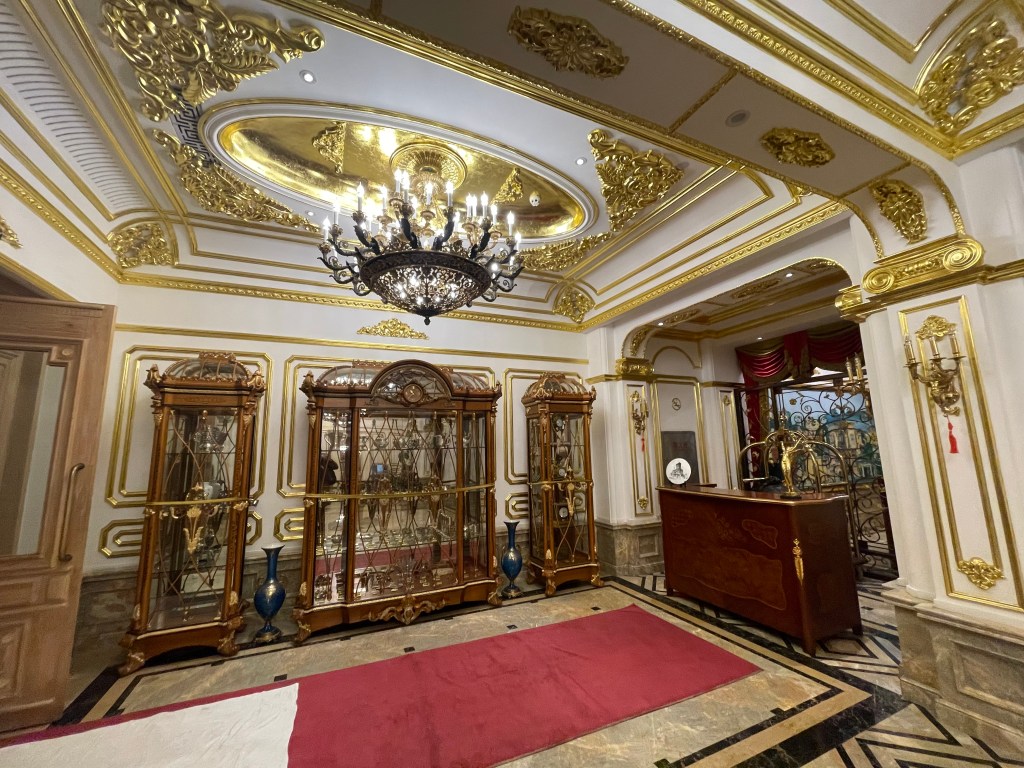
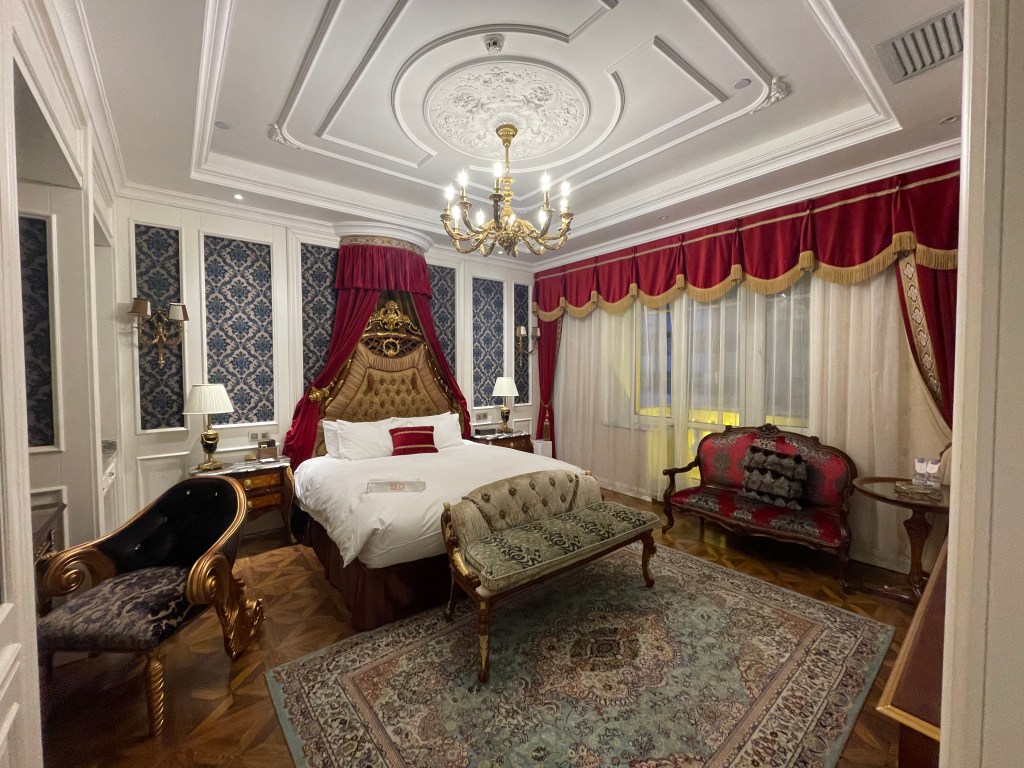
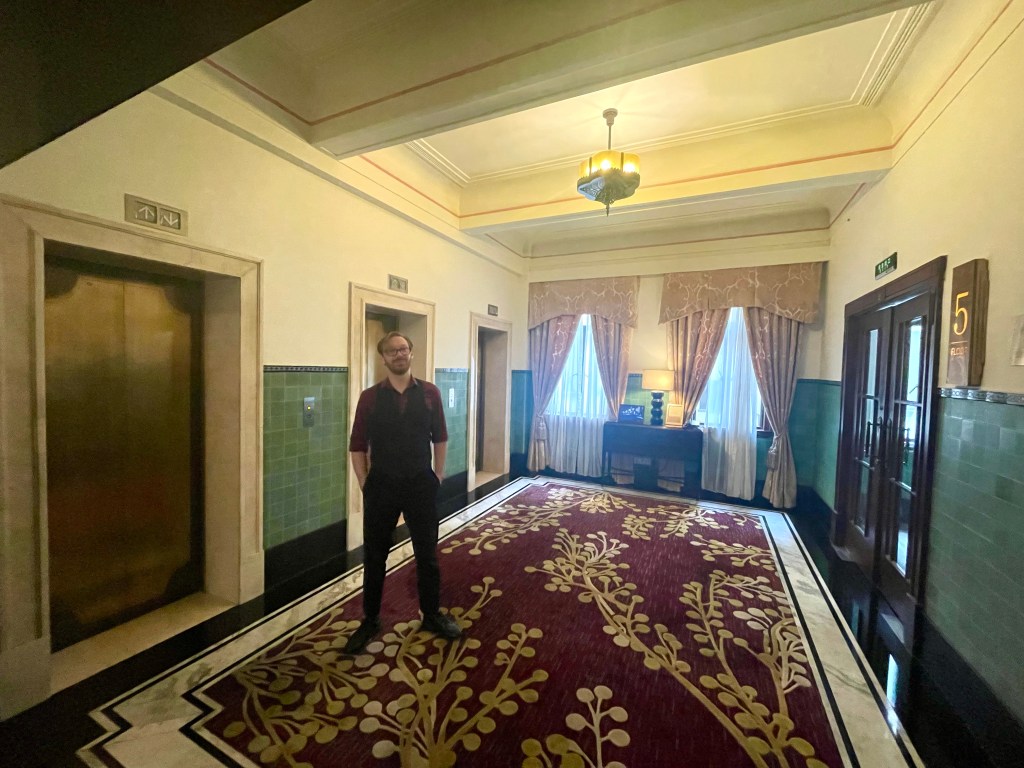
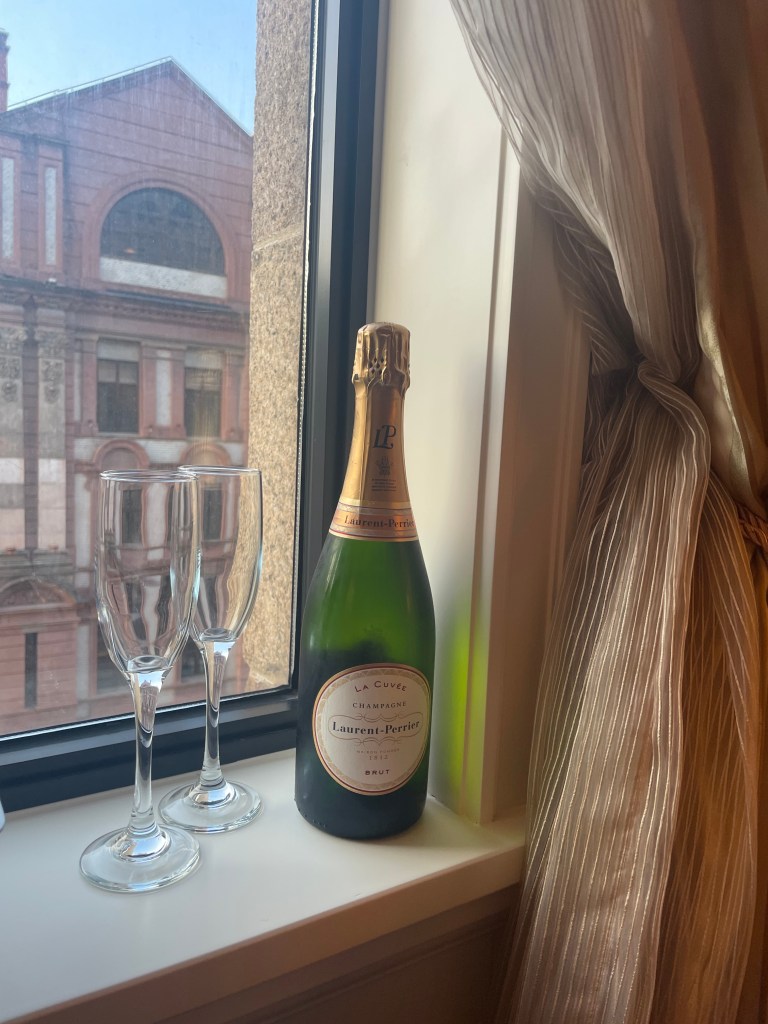
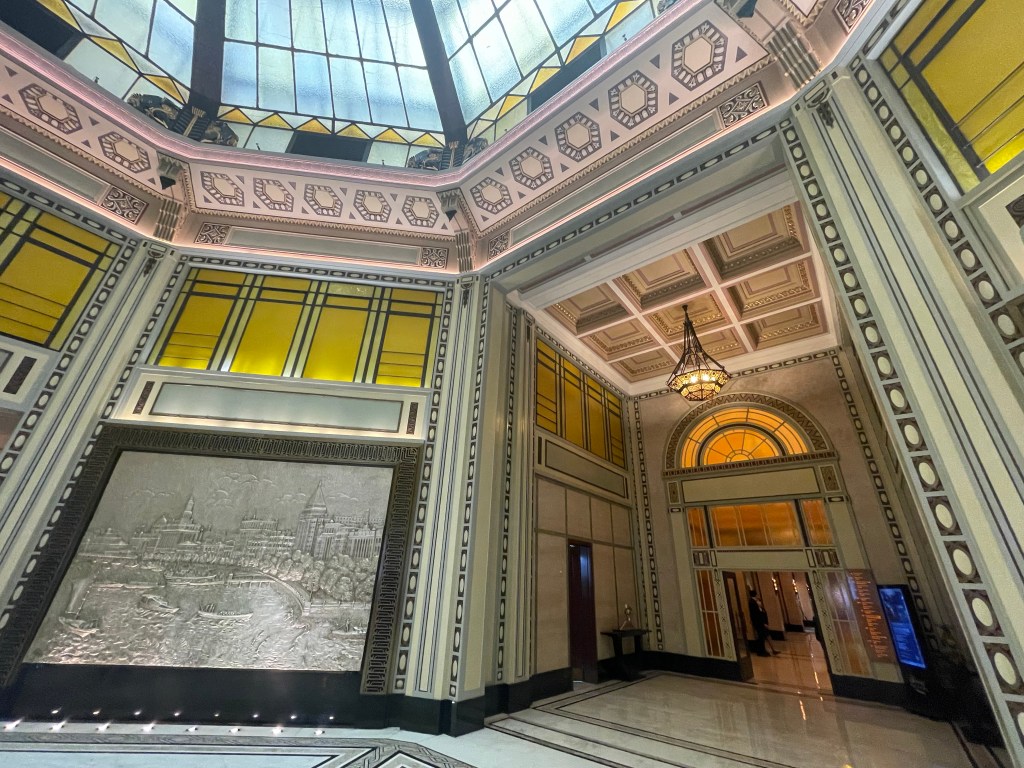
Though we’d be joining along with a tour a bit later on, Michael and I flew up a few days earlier to get a chance to explore Harbin on our own first. We decided to really lean into the aesthetic and booked a room at the Mansion 1903 Hotel. Located right on Harbin’s Central Street, the Mansion 1903 Hotel has a history going back over 120 years, and it feels like it as soon as you walk into the absolutely stunning lobby. I instantly began mentally cosplaying Anastasia – I mean, how could you not?!

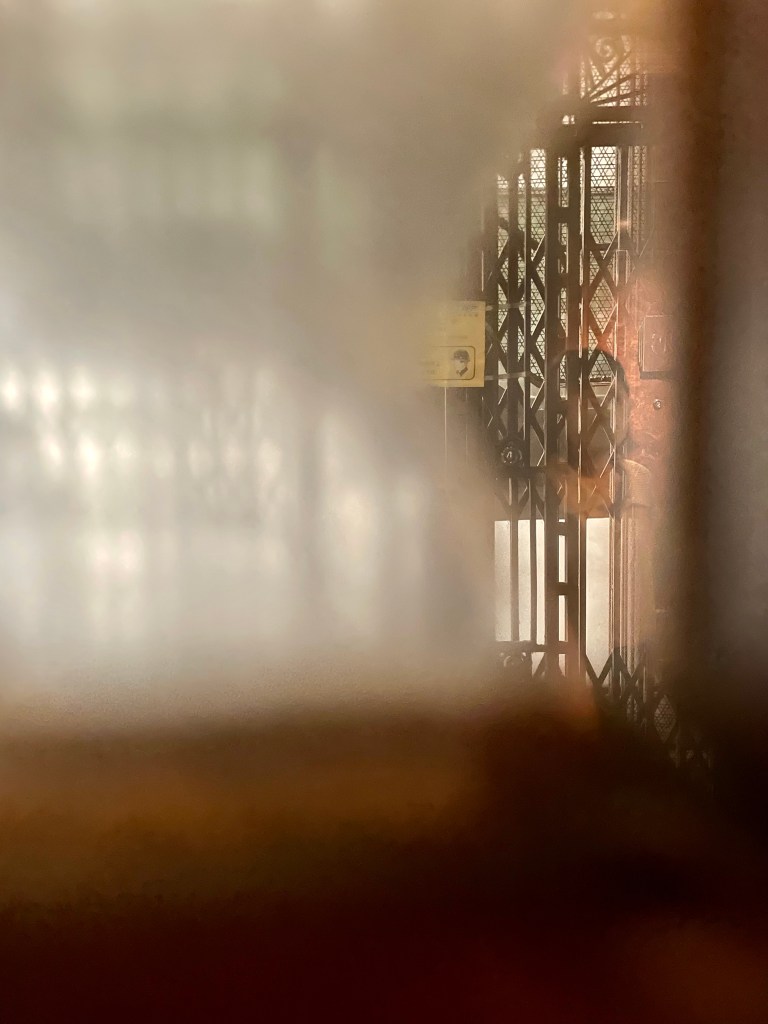
One of the cool features of the hotel is the original elevator, installed in 1903. Even though it’s more than a century old, the elevator is still operational! (But, alas, we still had to take the stairs to get up to our room…) Apparently, this elevator is one of two century-old elevators in China, with the other located in Shanghai. What a cool little piece of history!


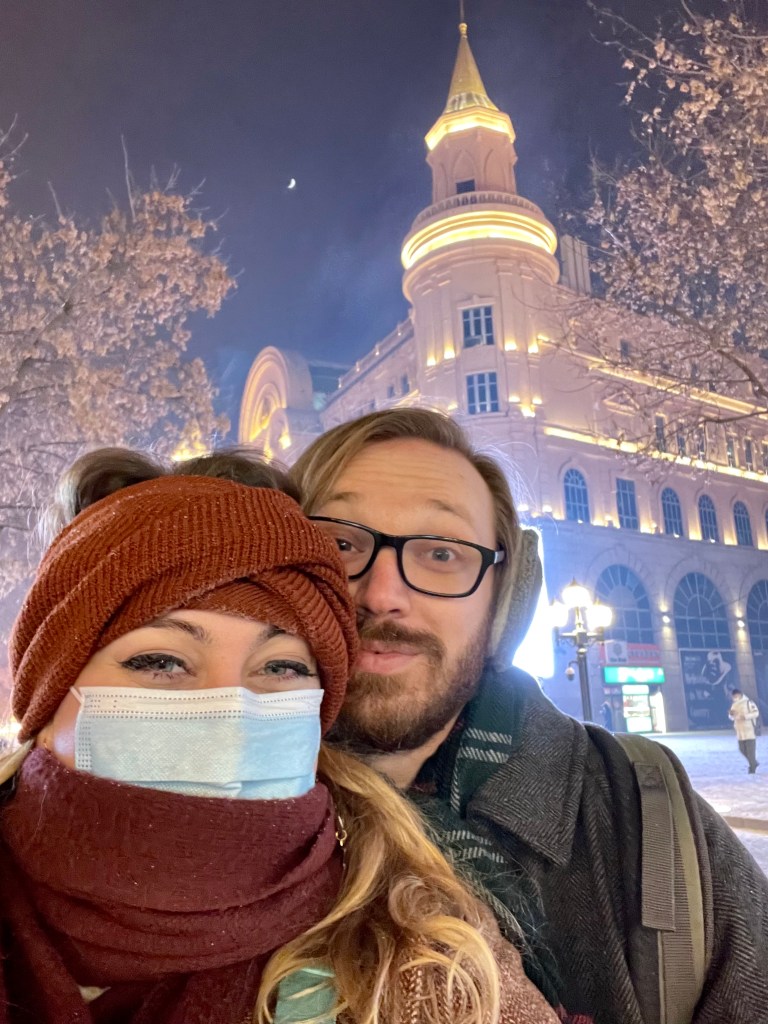
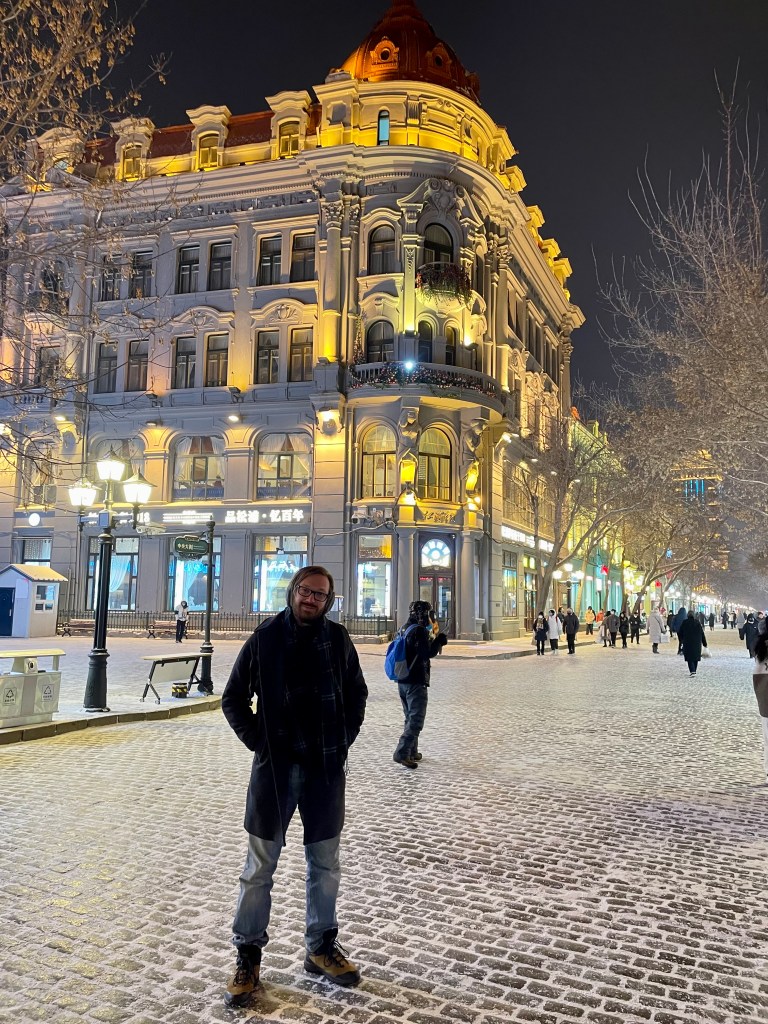
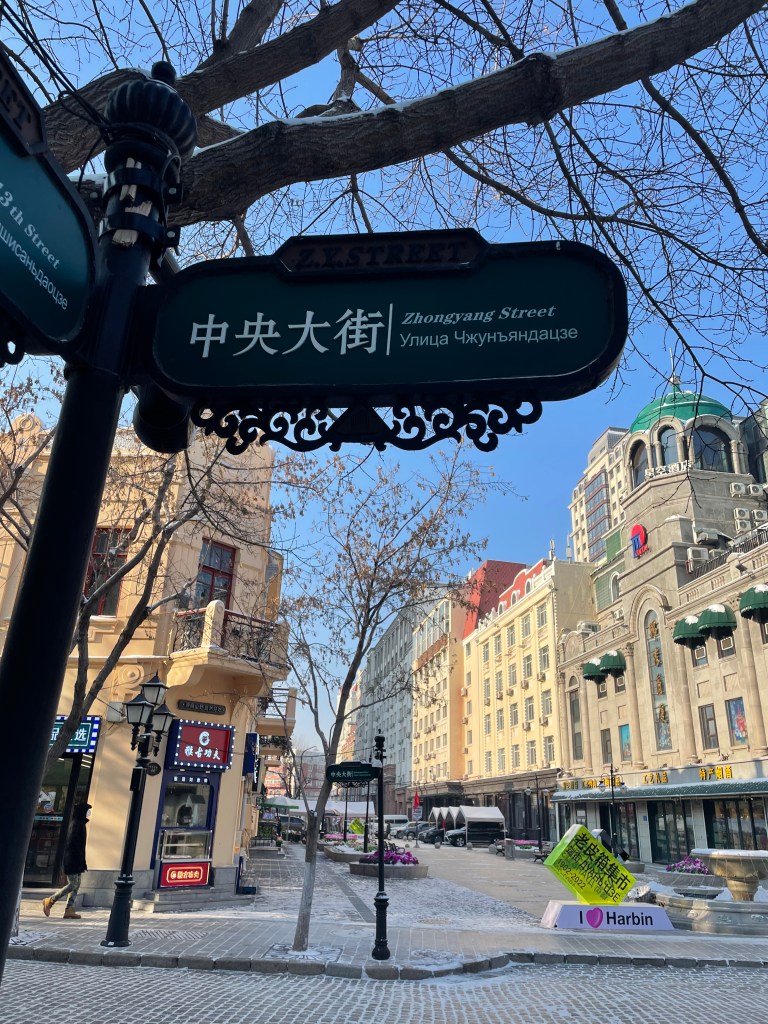
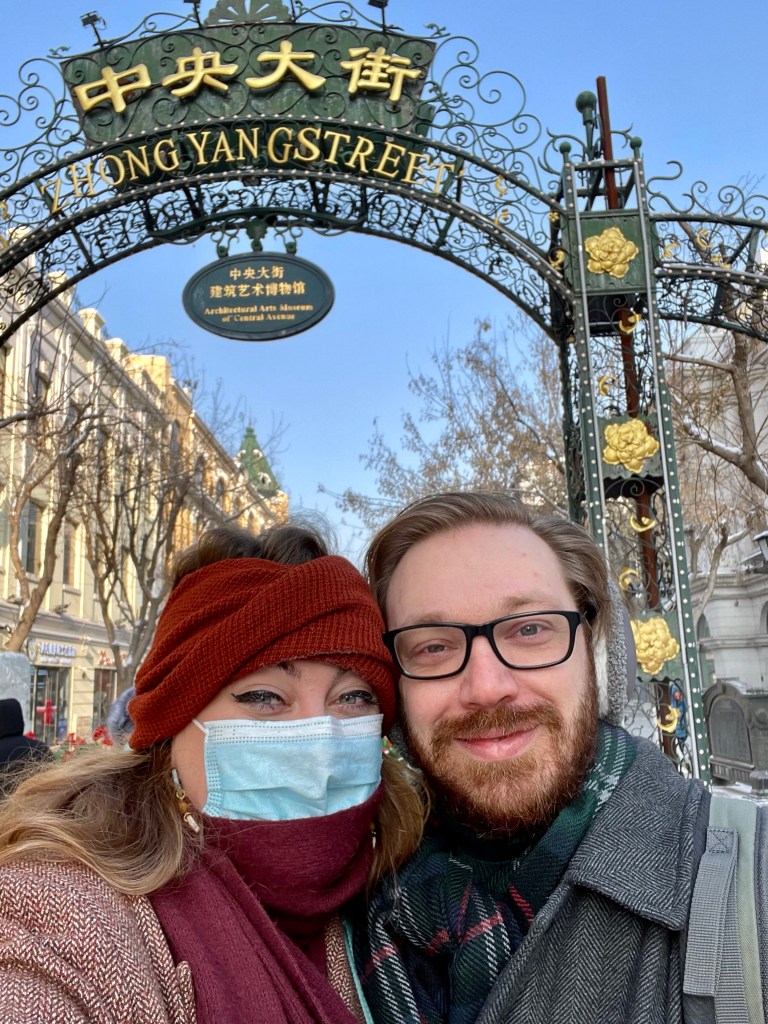
After giggling about how amazing the hotel was, we bundled up (and I mean BUNDLED – we’re talking long underwear, insulated undershirts, wool sweaters, three pairs of socks inside of fuzzy snow shoes, the whole nine yards) to go and explore 中央大街 Zhongyang Pedestrian Street. Zhongyang Street, or Central Street, is the longest and largest pedestrian street in Asia; the 1,400 meter long street was built in 1898 and has been referred to as a “gallery of European architectural art.” With hundreds of shops and restaurants lining the street, there are seemingly endless places to visit and explore. Though we couldn’t feel our fingers or toes within maybe 30 seconds of stepping outside, we were so excited to explore this iconic spot we’d be calling home for the next few days.


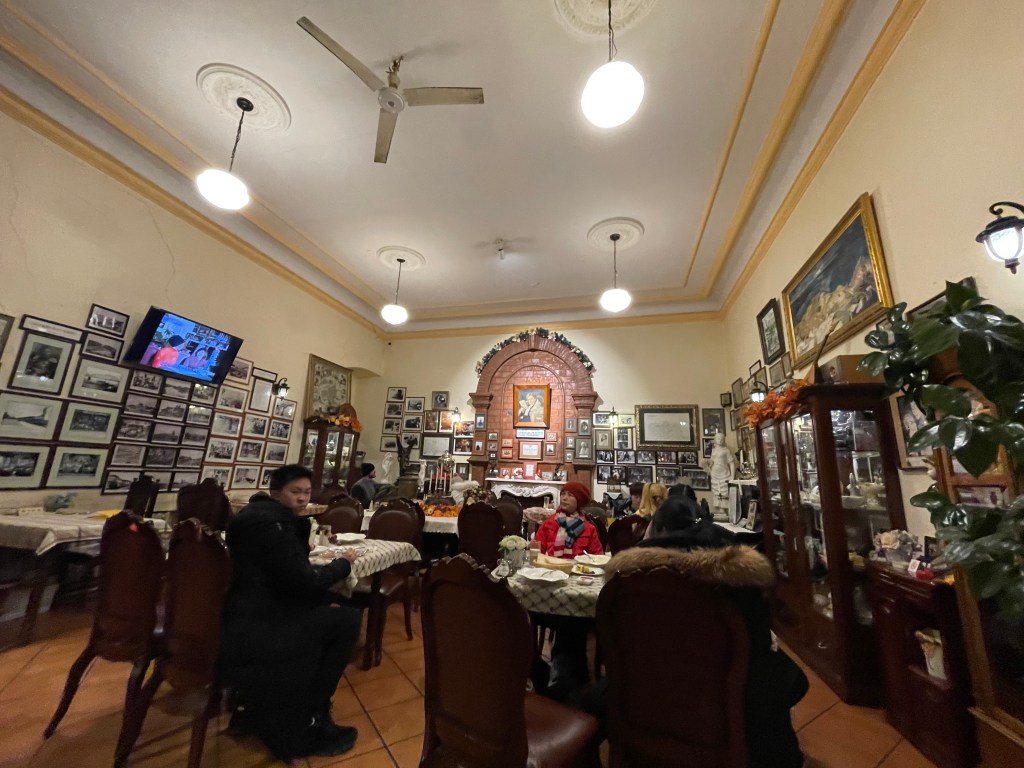
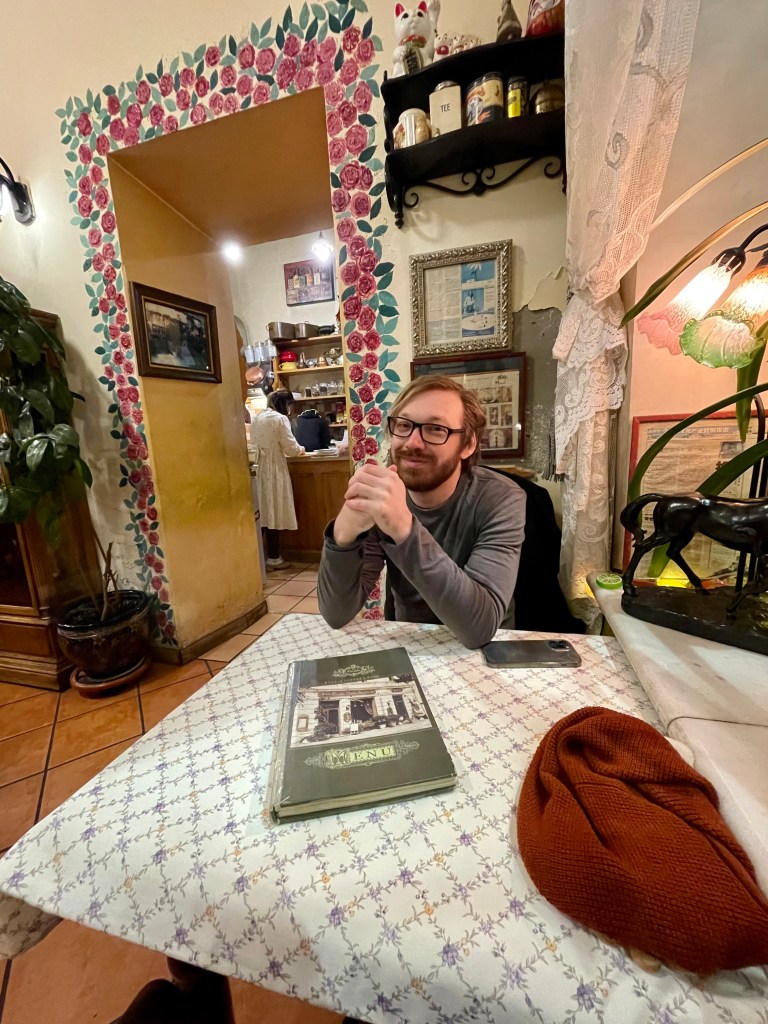
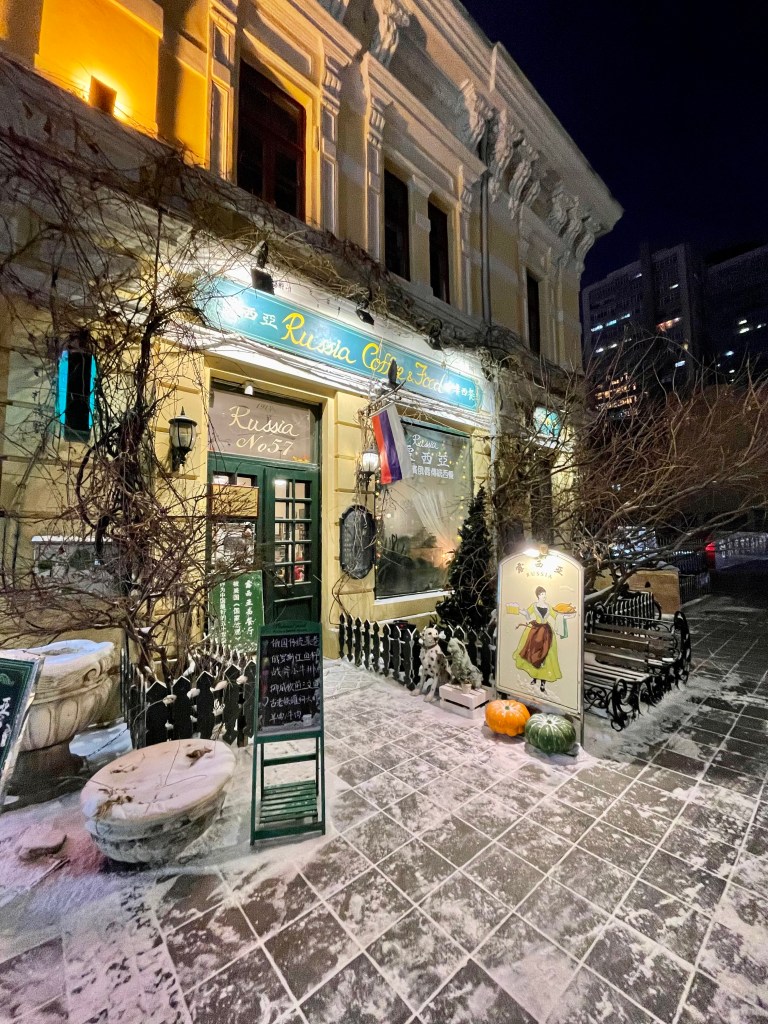
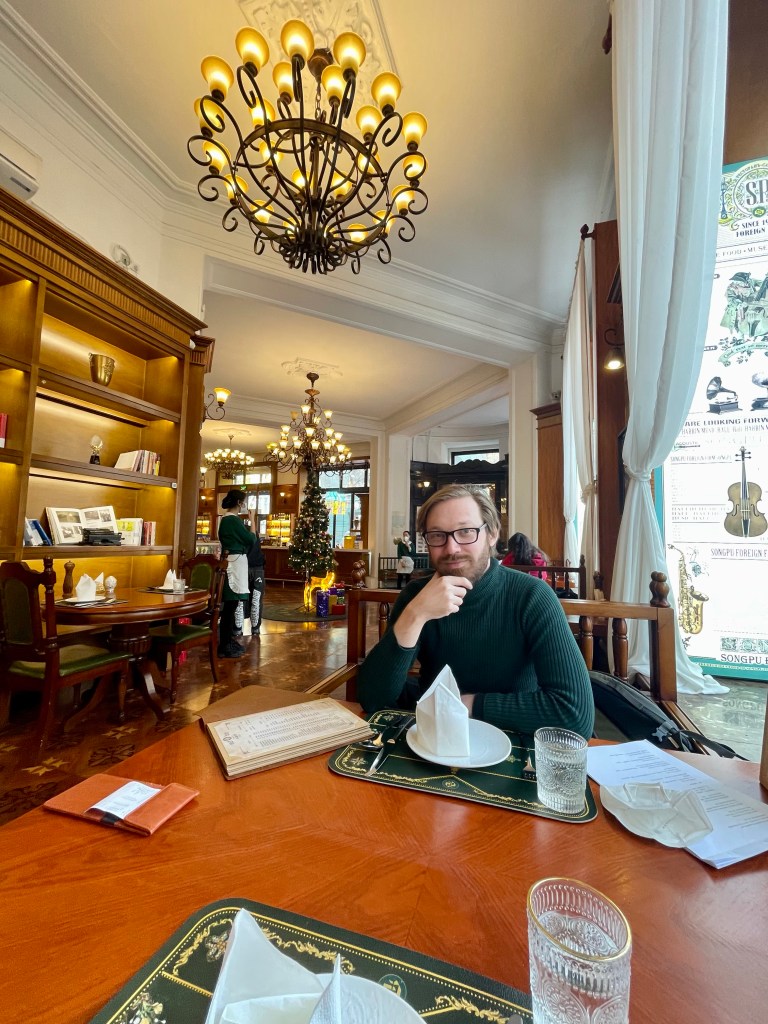
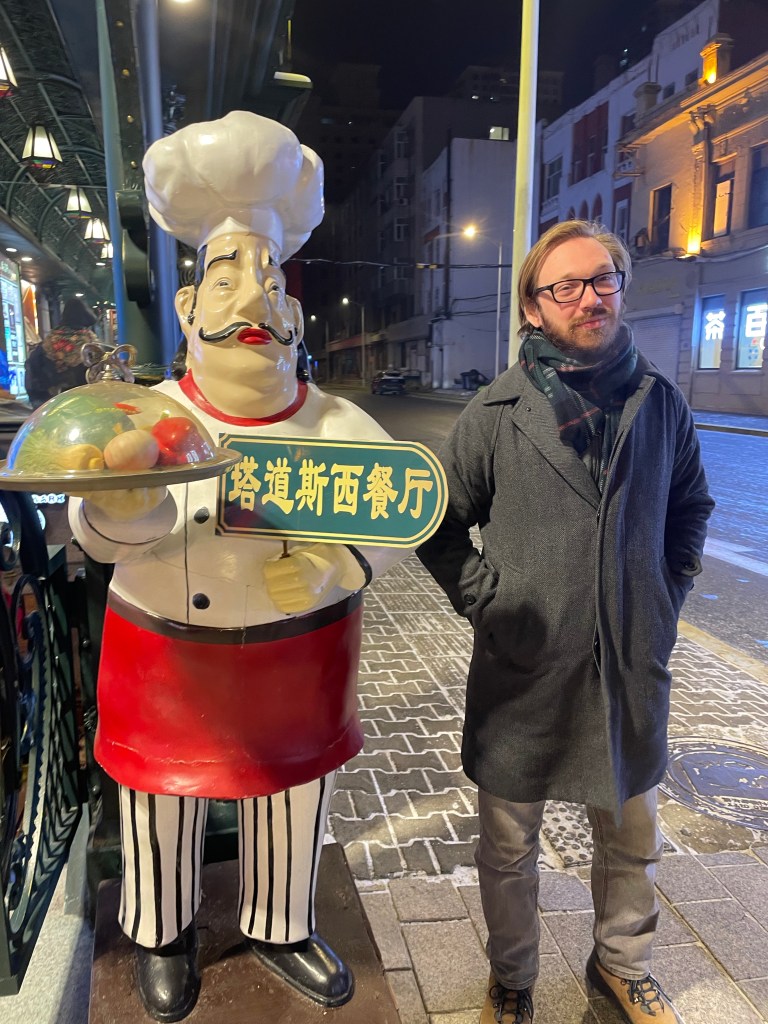
When it came time to grab dinner (and warm up a bit), we found a cute little restaurant whose sign simply said “Russia Coffee & Food” – we were curious to try some local Russian dishes in as authentic a place as we could find, so we headed in! (The placemats also said Russia Holiday Garden, but the menu seemed to allude to the restaurant being called Lucia? So, one of those may be the name of the restaurant? Unclear.) We were instantly in love with the kitschy, cozy vibes. It felt like stepping into a little old Russian grandmother’s home, with old black and white pictures covering the walls around us. After attempting a rough translation with my phone, we were able to read the following from what was written within the menu: “‘Lucia’ is a large living room of Russian expatriates in Harbin in the 1930s. She shows the life, history, and culture of Russian expatriates in Harbin. She wants everyone who walks into this large living room to feel a history of the past. . . They are cordial, friendly and sincere, living in harmony with the Chinese people in Harbin. They no longer see their faces. The only thing left is a very sweet memory, with a few sad. After signing an agreement with the Qing Empire, on June 10, 1898, the Russians built the railway to the Songhua River in this wasteland. The Russians created this city again – Harbin. Due to various historic and political ignorance, 200,000 Russians left Harbin in a hurry in the 1960s. This is not only their home, but also their soul.” We know it may be unlikely that we will ever be able to experience Russian culture in Russia, a place we may never get to visit. We also know that a culture is not its leader or its politics, and there are good people in every culture. So, we feel lucky to be able to experience the little bits of this culture and cuisine that we could find.
For dinner, we tried two of the recommended dishes: a traditional Harbin Russian red vegetable soup and cabbage rolls! From their menu: “Red vegetable soup, also known as Suba soup, is to make soup with fresh beef bones for six hours. Add potatoes, tomatoes, cabbage, and a variety of seasonings slowly. Fresh, sour, and delicious, balanced nutrition. It’s a story that’s been around for over a hundred years.” Both dishes were delicious and comforting, and we absolutely loved having dinner here for our first night in Harbin!


After sufficiently stuffing ourselves, we waddled back to our dream of a hotel. (To sleep on the hardest mattress we’ve ever experienced. You win some, you lose some. Ah well.) After experiencing only a few hours out on Zhongyang Street, we were already excited for what the next few days would bring.


The next morning, we set out with only one intention: eat ALL the things. (And we truly mean ALL the things. From this point on, this post will mainly be about food because that’s, quite literally, what we spent most of the next day doing. I have no regrets.) We started by walking all the way down to the end of the pedestrian street to see what we’d be working with, keeping track of the restaurants we may want to try later. When we saw a sign for kvass, we went in to grab a bottle! Kvass is a traditional Russian beverage made from fermented rye bread; I had first tasted it when I was out in western China my first year here and LOVED it, so I was eager to share it with Michael! (The kvass in Xinjiang was better, though. This stuff was….fine. But I still have dreams about the kvass in Xinjiang…)
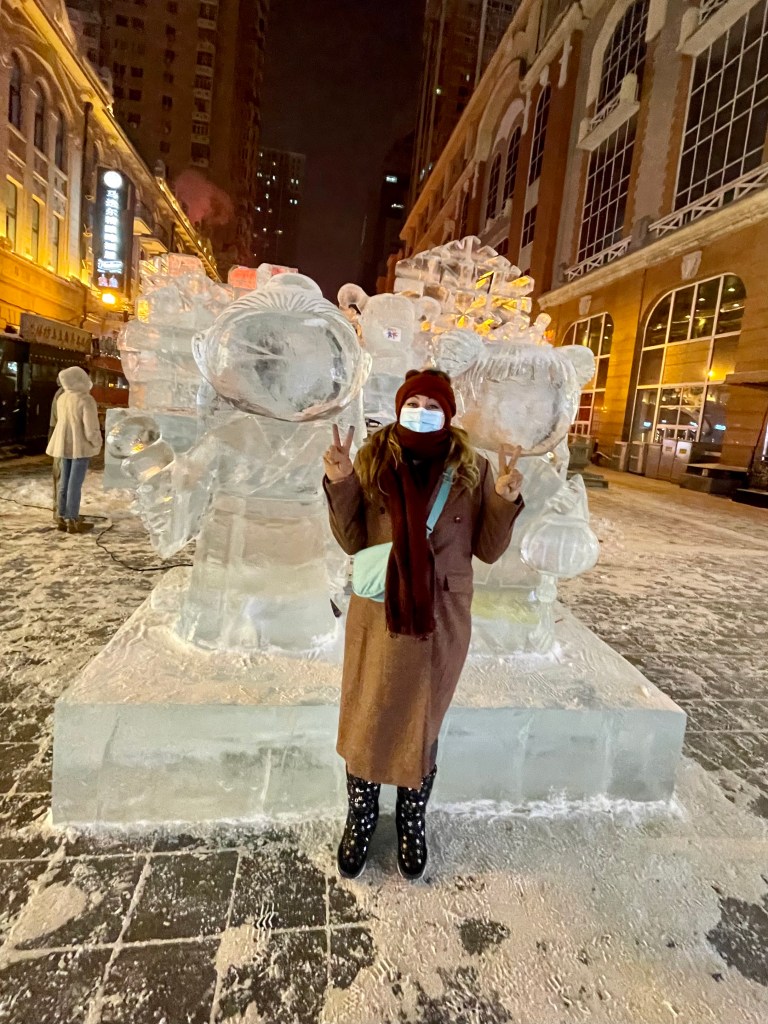
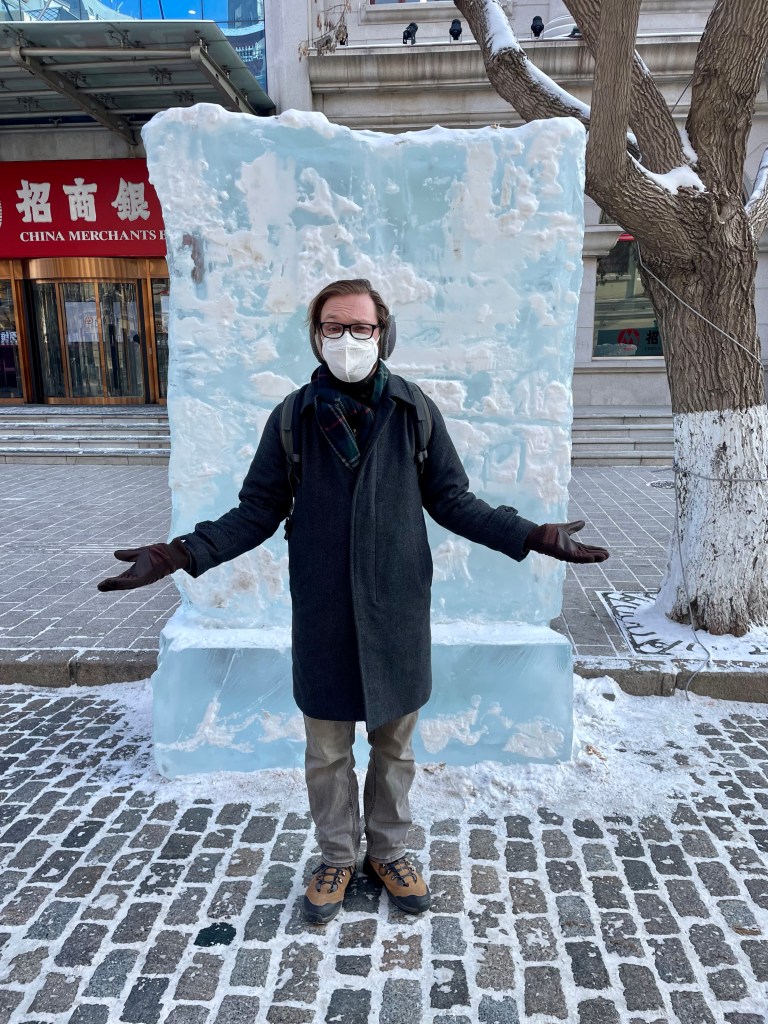
With streets that were still quiet before most of the city woke up, we were able to wander up and down the cobblestones all morning taking in the sights. The city was preparing for the upcoming ice and snow festivals, and so there were all sorts of sculptures being constructed along the sides of the street!

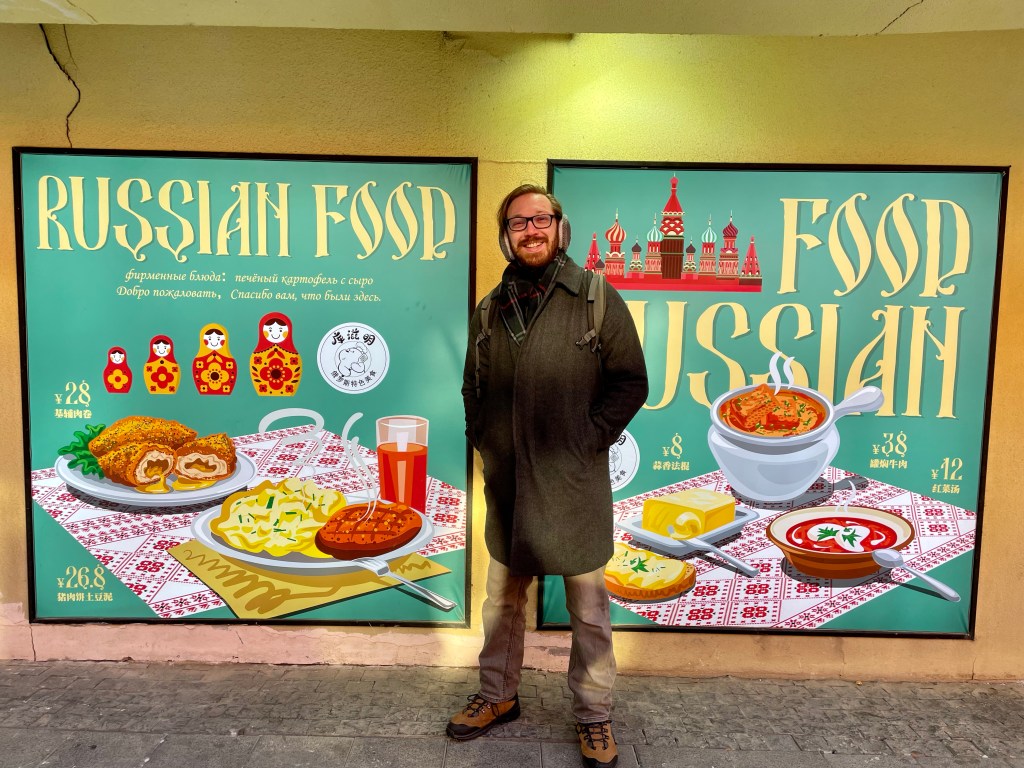


For first lunch, we stopped in to get some classic Harbin boiled dumplings filled with pork and cabbage. If there’s one thing you should know about Michael, it’s that he enjoys a good dipping sauce. So, when presented with six different options, we went with…all of them. And then proceeded to taste test all of the different possible combinations. We love a good food experiment!
Our next snack was one that I had read a lot about when researching local Harbin food: a 马迭尔冰棍 Madieer Ice Cream Bar! (Ice cream?! In below freezing weather?! Absolutely!) The ice cream parlor was founded in the Qing Dynasty in 1906 and still utilizes the same production methods it used when it first opened. The classic ice cream “popsicle” is a simple recipe with a “milk” flavor. You guys, this may be the best ice cream I’ve ever tasted. And when the rest of you is already freezing, the freezing cold of the ice cream doesn’t feel too bad! Plus – it doesn’t melt as you’re eating it! It’s a win-win.
As we were walking along, we then saw what looked like a Coca Cola shop selling steaming hot cups of Coke. Thinking it couldn’t possibly just be hot Coke, there must be some kind of cocktail or like mulled something going on, Michael went up and pointed at the menu to purchase whatever it was that everyone else was ordering, no questions asked. It was, in fact, a steaming hot cup of Coke. We both took a few sips, said “huh,” and moved right along.
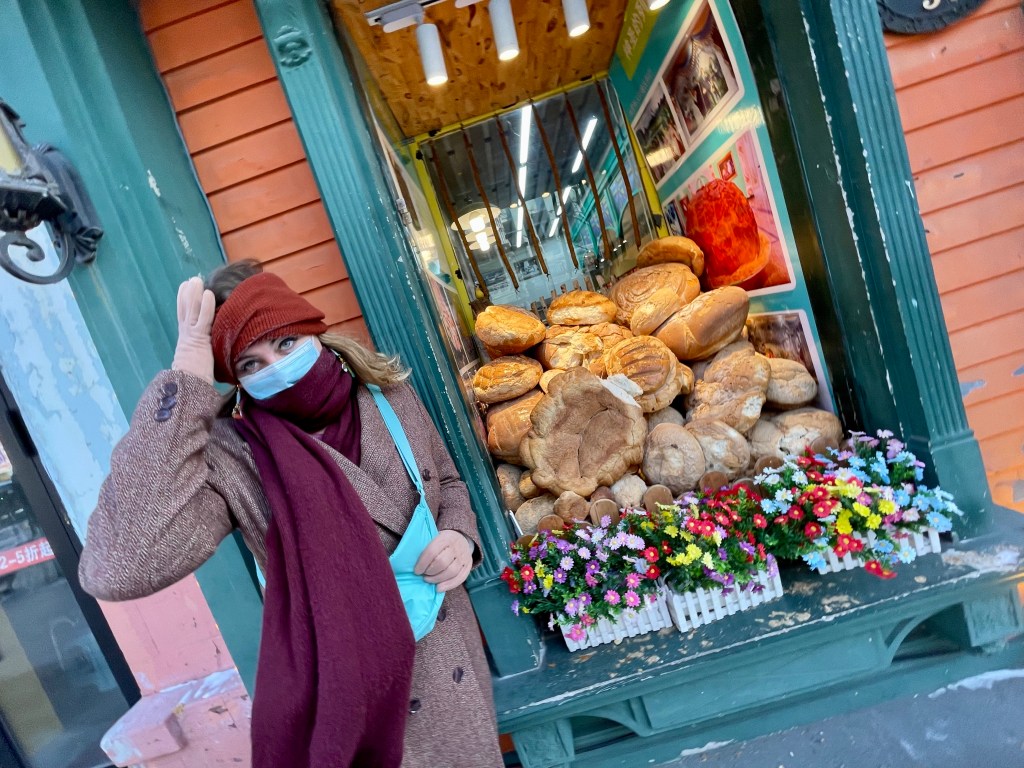
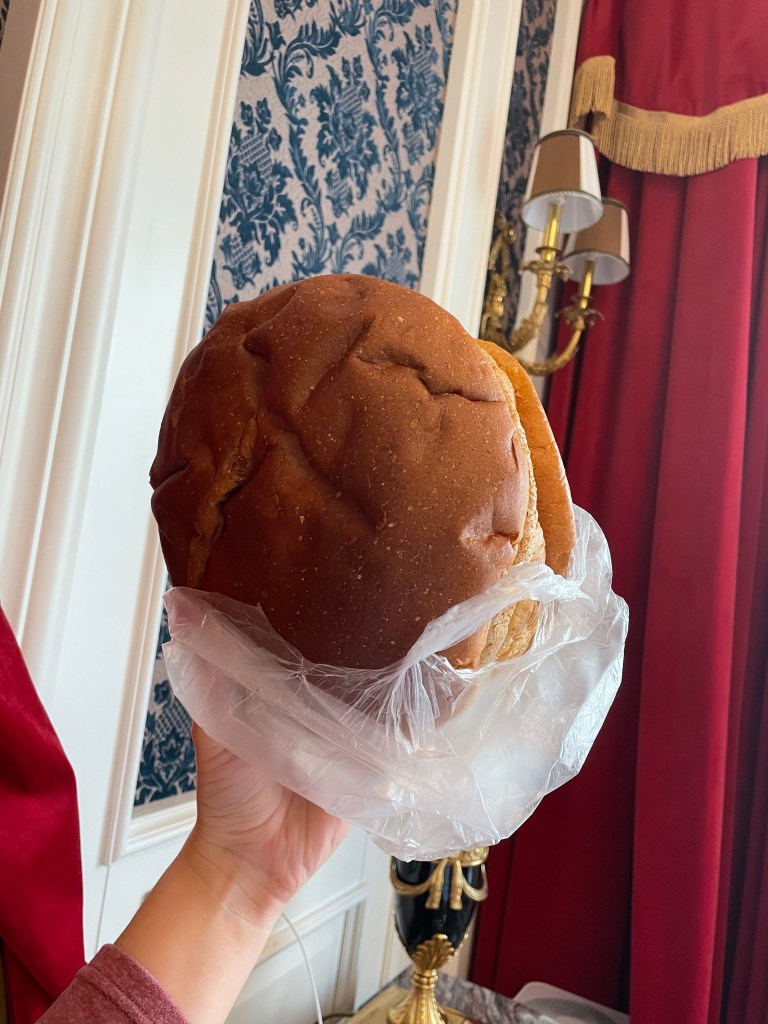
The next snack we brought back to nibble on in the hotel room was another of the famous foods I’d read about: 大列巴 Dàlièbā, or Big Bread. (“Da” is Chinese for “big,” and “khleb” is Russian for “bread” – Dàlièbā is the combination of those two words.) This giant loaf of sourdough was introduced to locals by Russian bakers over a hundred years ago, and now can be found in the windows of all of the local bakeries. (I have to be honest, by the time we tried this back in the hotel we were, unsurprisingly, so very full that we only had a few bites. They were good bites, but…we couldn’t do anymore. We put the rest back in its bag to save for a later time.)



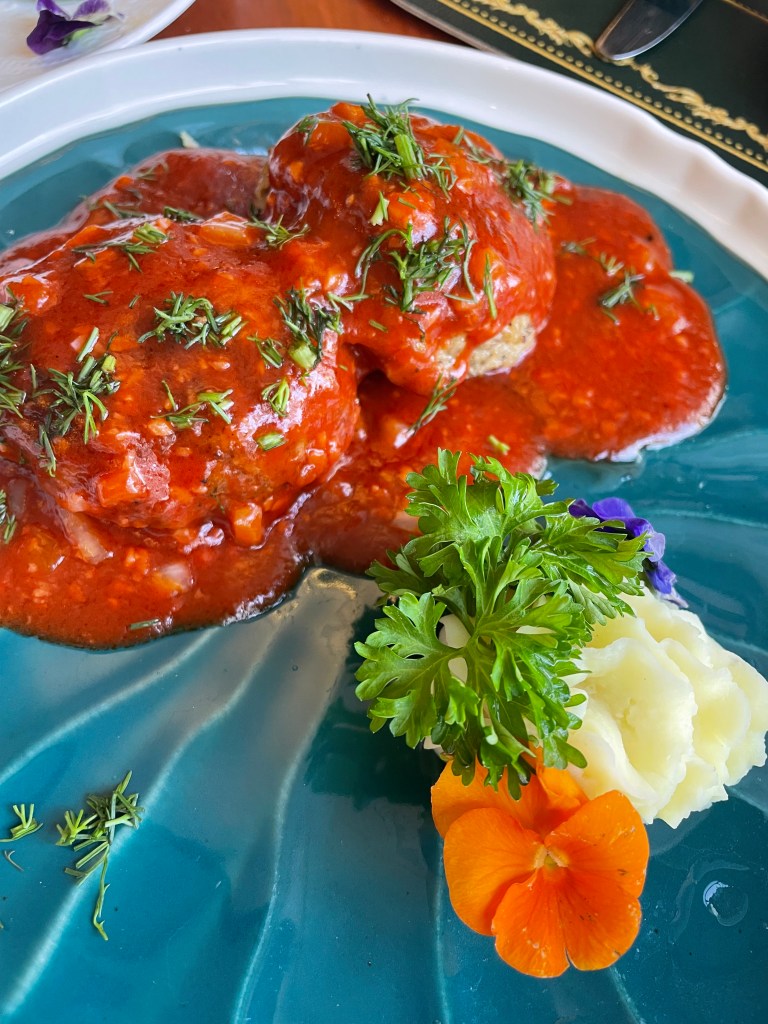
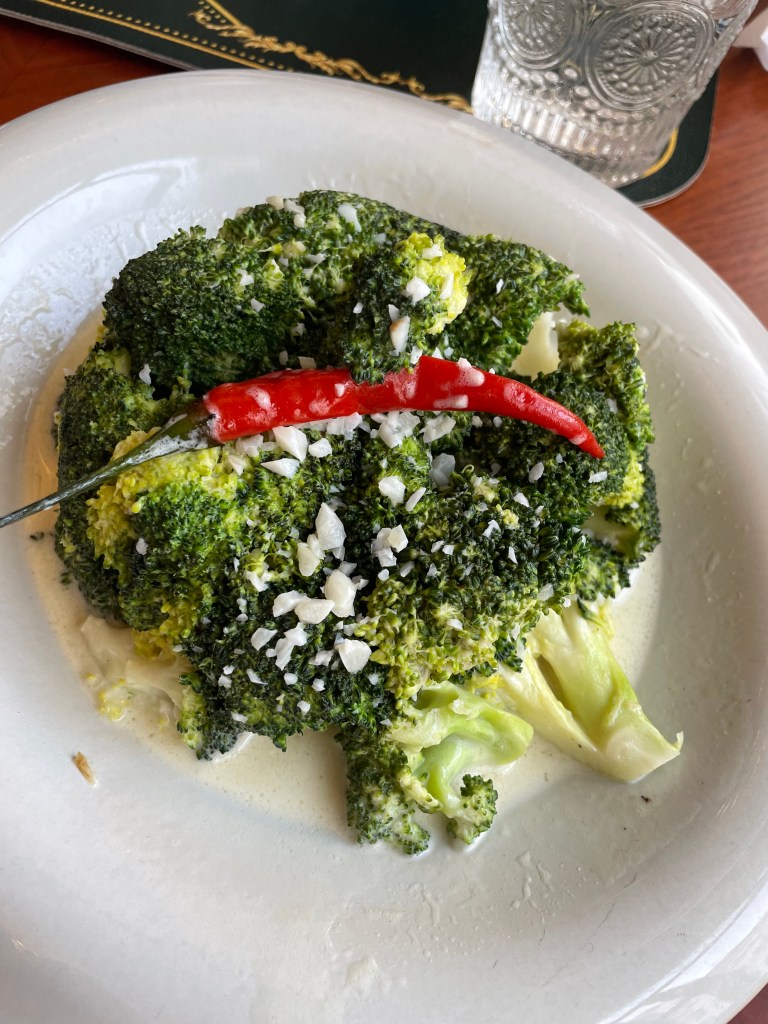
After naps to try to digest a bit, we went out for lunch! (I warned you. All we did this day was eat. I am actually pretty impressed with us. Good job, us.) We walked over to a beautiful place a few blocks from our hotel and split an appetizer of mushroom soup, broccoli with white sauce, and Russian meatballs. (I don’t know what else to say, I’m not a food blogger, but guys – go to Harbin just to eat. Seriously. Everything was fantastic.)

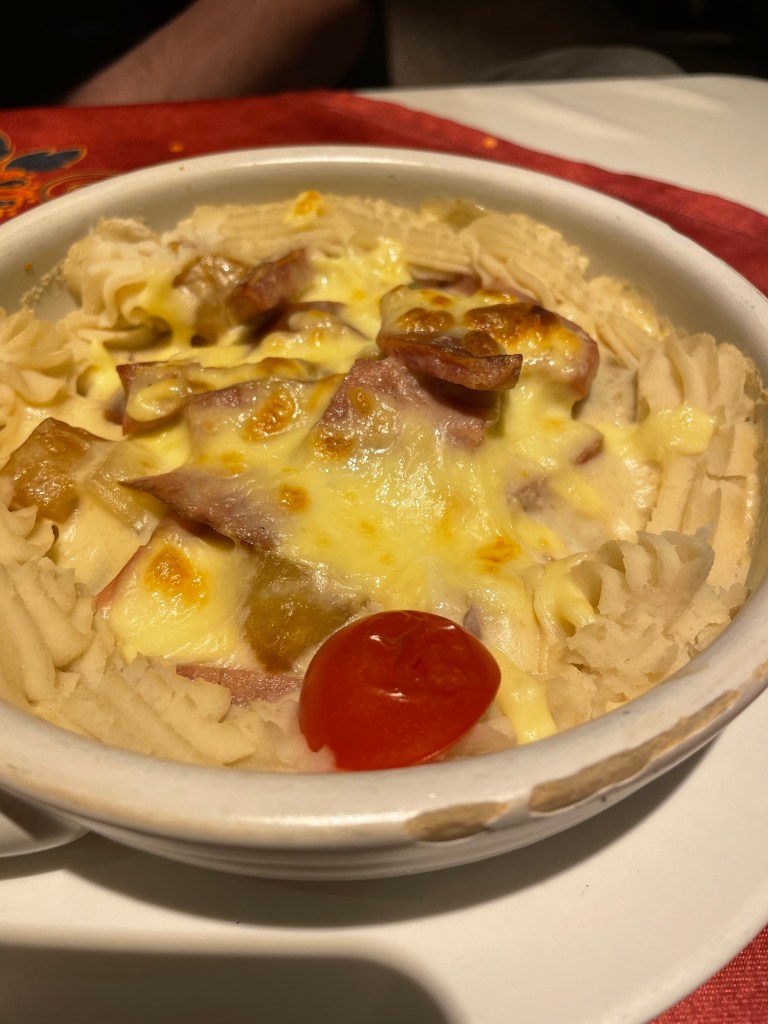
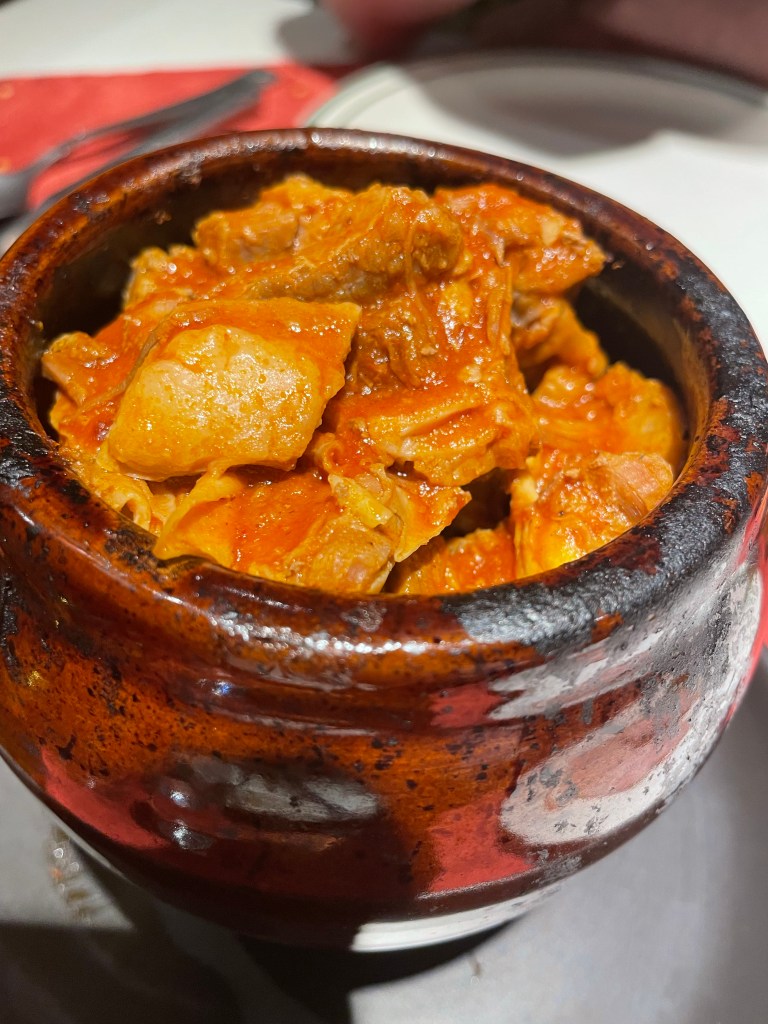
Because we clearly hadn’t had enough to eat, after another few hours resting and warming up at the hotel, we wandered our way into Tatoc for dinner. Originally an Armenian restaurant (that now is mostly thought of as being Russian), Tatoc is filled with old antiques – gramophones, typewriters, books, brick fireplaces, unique lamps – that instantly transport you to a different time and place. We ordered the stewed mutton and sausage with cream sauce (and vodka…because…obviously…).
While sitting down for dinner, a few days before the new year, Michael and I pulled out a notebook to go back through memories from the year. We thought about the trips we’d been on – to Xishuangbanna, Guilin, Sanya, Ningxia, and now Harbin – and the restaurants we’d eaten at, the food we’d tried, the views we’d seen, the dates we’d been on, and experiences we’d had. (Including the terrible, horrible, no good, very bad lockdown.) We each made Top 5 lists in each of the categories and shared them with each other, laughing and reflecting. We realize how incredibly lucky we are to be here, and really enjoyed looking back on the year to count our blessings. This has, since then, become one of our favorite new year’s traditions.


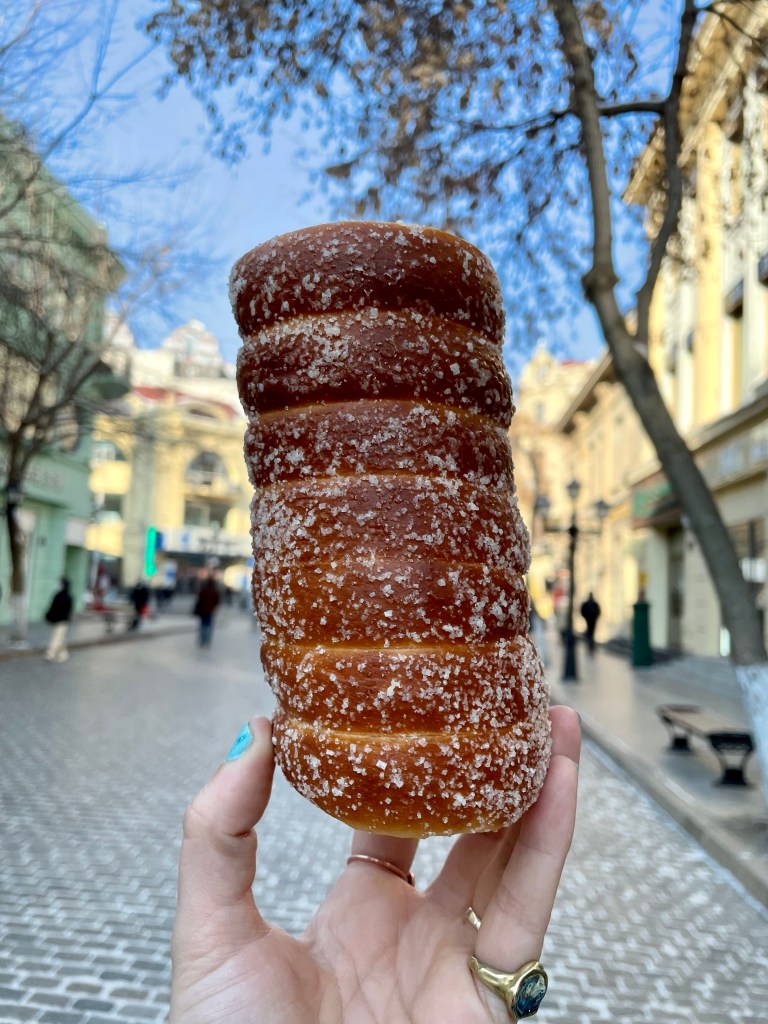
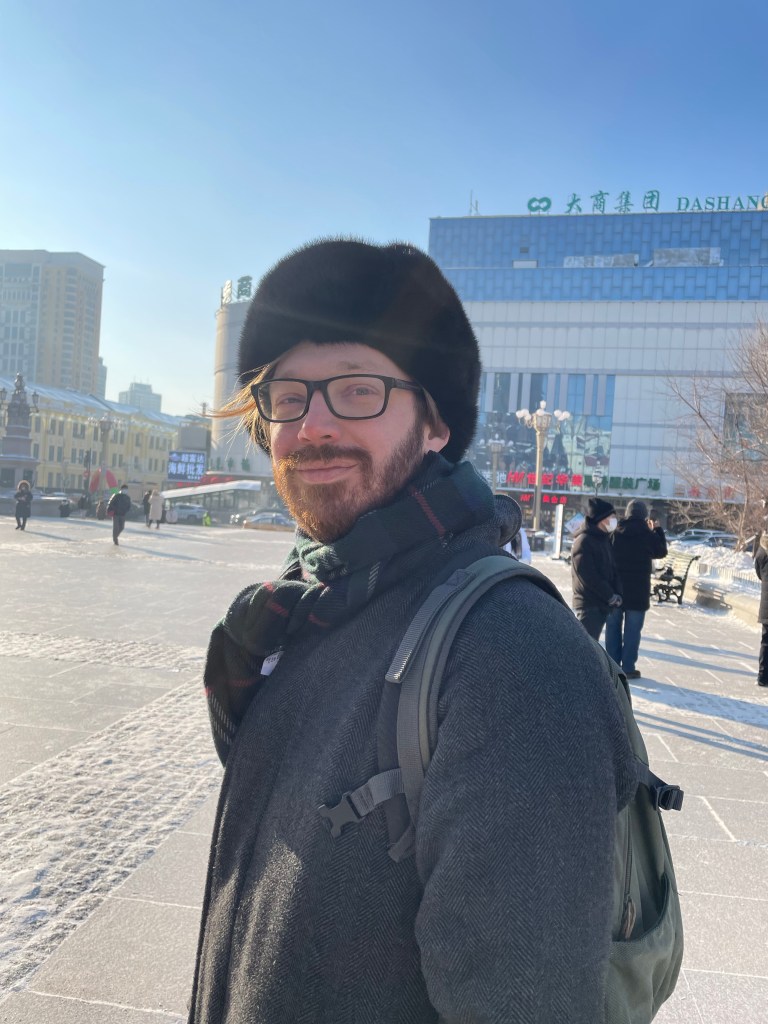
The next morning, it was time to check out of our royal palace of a hotel and enjoy our last day on our own before joining our tour. We went for one last walk along Zhongyang Street and each bought an уша́нка ushanka (you know those hats – the big Russian fur-trapper ear-flaps hats that instantly make you feel like you’ve stepped into Anna Karenina) as well as some Russian nesting dolls to bring back home for friends and family. And, because it is physically impossible to walk along Zhongyang without buying snacks, we also grabbed fried cheese sticks and, a personal favorite, kürtőskalács! Kürtőskalács, or “chimney cakes,” are a Hungarian sweet fried dough that is spiraled up and coated with sugar – when served hot on a cold day, the steam that comes up from the top of the cone makes it look like a little chimney! My friend Becca and I had loved them when we found them at a Christmas market in Budapest in 2018, and so I was so excited to have found them again way up here in China.


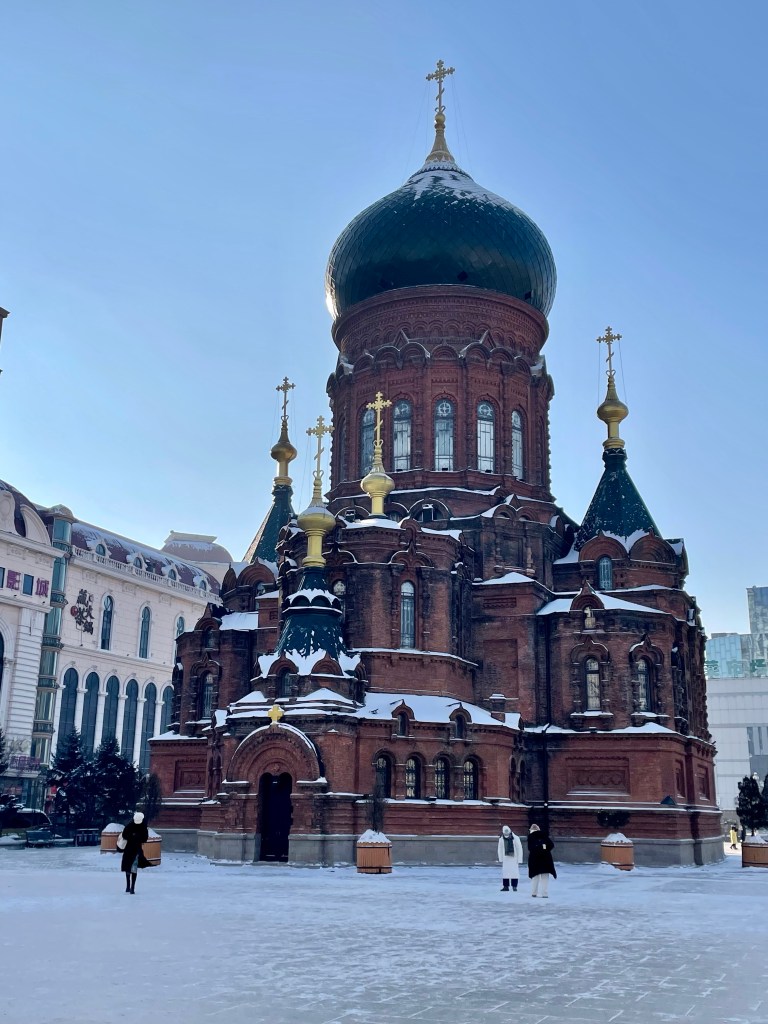
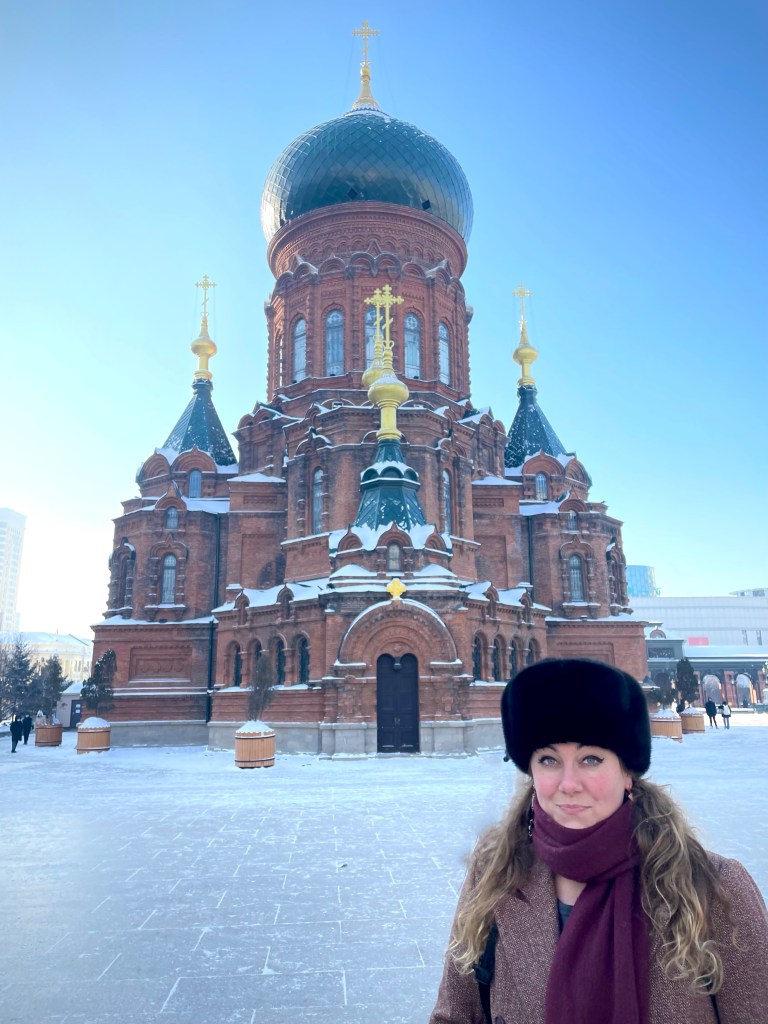
After finally saying goodbye to Zhongyang Street, we wandered over to see another of Harbin’s famous sites: the Софийский собор 圣索菲亚教堂 Saint Sophia Cathedral. Built by Russians in 1907, Saint Sophia is the largest Eastern Orthodox church in the Far East, and is the most finely protected Neo-Byzantine architecture in China. (It now serves as an art gallery!) Though we weren’t able to see the inside (on this visit…), we were not upset at all – just walking around the square admiring this beautiful cathedral from all sides was worth the trip in and of itself! The architecture of the structure is so different from what we’ve seen in other areas of China, and so it was really cool to be able to experience it.

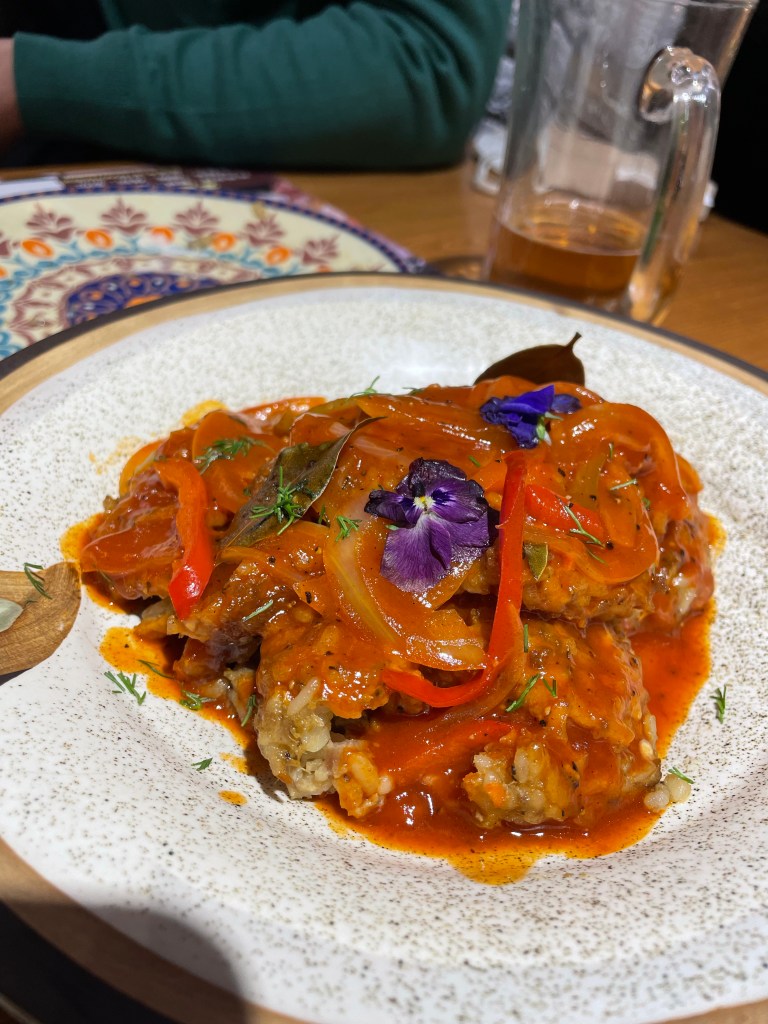
We stopped in for one final meal in this part of town before walking across the city to our next hotel across the city. This restaurant might have been called Brown Bear but, again, hard to know for sure and the internet provides no further information upon searching for it. We once again were instantly enveloped in cozy, kitschy trinkets and decorations (I’m sensing a theme here) and loved all of the colors. We ordered pirozhki (mutton & veggie buns), some kind of delicious beef and rice patties with a great tomato sauce, and, my personal favorite, borscht. If you don’t know, borscht is a soup that originates in Eastern Europe and Northern Asia made with meat/bone stock, vegetables (cabbage, potatoes, carrots, onions, garlic, and beets), and seasonings. Look, I’ve had authentic borscht a few times before (I dated a Russian in high school, it was a frequent dinner at his house) and didn’t think I really liked it, but this borscht was unlike anything I’ve ever had before. It was incredible. I begrudgingly accepted that I had to admit I actually like borscht now. I need to know what their secret was, so I can make this myself and cozy in whenever it gets cold outside. SO good.



We walked the 30 minutes to the hotel (and oh boy was a walk needed after yet another fantastically filling meal…) and then, honestly, laid down and did nothing for the remainder of the day. We had snacks from our bags for dinner and went to bed early. Though we tend to do a lot in our days when traveling, sometimes you have to balance it with time to just rest and take a too-long shower. So I may not have as much to share on those days, but, believe me, they’re there too. Don’t worry though – our next day in Harbin would bring us a New Year’s Eve exploring what Harbin is actually famous for…





















































































































































































 Adventure in the Great Wide Somewhere